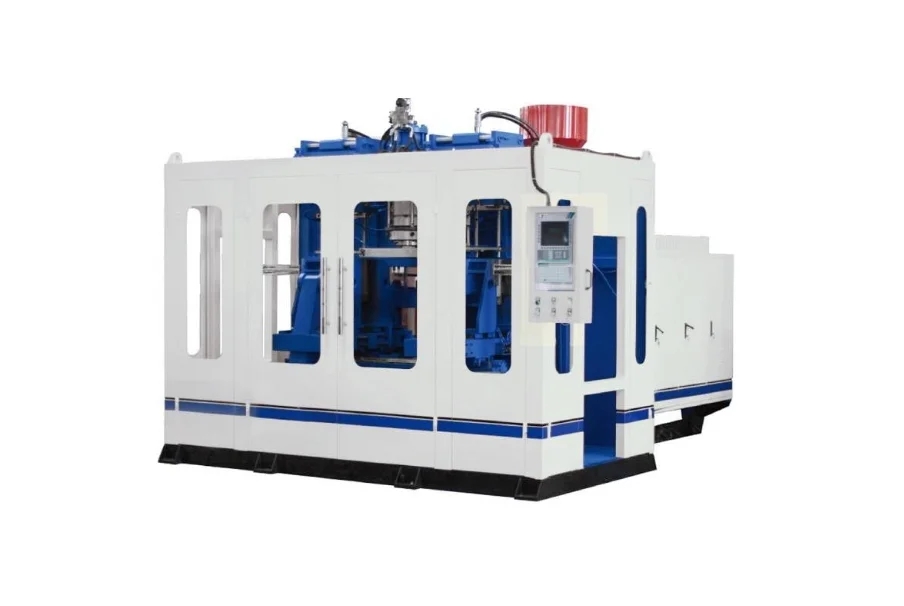
The beverage and bottled water industries continue to face increasing pressure to improve production efficiency while maintaining consistent product quality. As production volumes grow and market competition becomes more intense, manufacturers are looking for equipment that delivers stable output, minimizes waste, and reduces operational costs over the long term. Among the many investments available, automatic PET blow molding machines have become one of the most practical solutions for companies seeking sustainable manufacturing performance.
Although purchasing advanced equipment requires careful planning, the real value of an automatic blow molding machine lies in its ability to lower production costs throughout its service life. Faster production cycles, lower energy consumption, reduced labor requirements, and improved bottle consistency all contribute to greater operational efficiency.
For manufacturers producing bottled water, juices, carbonated beverages, edible oil, dairy drinks, and other liquid products, understanding the cost efficiency of automatic PET blow molding technology is essential when planning future production capacity.

Understanding Cost Efficiency Beyond Initial Investment
Cost efficiency is often misunderstood as simply purchasing equipment with the lowest acquisition cost. In reality, experienced manufacturers evaluate the entire lifecycle of a machine.
Several factors contribute to long-term production economics:
Production output per hour
Energy consumption
Material utilization
Maintenance frequency
Labor requirements
Product consistency
Downtime reduction
Equipment lifespan
An automatic PET blow molding machine that consistently operates with high efficiency can significantly reduce manufacturing costs over many years of operation.
Higher Production Output Improves Overall Efficiency
Production speed has a direct impact on manufacturing costs.
Automatic PET blow molding systems are designed to operate continuously with minimal manual intervention. Modern servo-controlled systems maintain stable heating, stretching, and blowing parameters, allowing every production cycle to remain highly consistent.
Higher output means:
More bottles produced during each shift
Better utilization of factory space
Lower equipment cost allocated to each bottle
Greater flexibility during seasonal production peaks
For companies supplying supermarkets, beverage brands, and export markets, stable high-volume production helps meet delivery schedules while maintaining manufacturing efficiency.
Reduced Labor Requirements
Traditional semi-automatic blow molding equipment often requires multiple operators for loading preforms, removing bottles, quality inspection, and machine adjustments.
Automatic systems integrate these processes into a continuous production workflow.
Labor savings come from:
Automatic preform feeding
Automated bottle transfer
Intelligent production monitoring
Reduced manual adjustments
Centralized control systems
Instead of relying heavily on manual operation, manufacturers can assign personnel to quality management, equipment maintenance, or production planning, creating better overall workforce utilization.
Lower Material Waste
PET resin accounts for a substantial portion of bottle manufacturing costs.
Automatic blow molding machines improve material efficiency by maintaining consistent processing parameters.
Benefits include:
Uniform bottle wall thickness
Reduced bottle deformation
Lower rejection rates
Stable bottle weight
Improved neck finish accuracy
Every rejected bottle represents wasted PET material, production time, and energy. Reducing defects directly contributes to lower manufacturing costs.
Energy Efficiency Makes a Significant Difference
Energy consumption has become an increasingly important consideration for modern factories.
Advanced automatic PET blow molding equipment incorporates several technologies designed to reduce power usage:
Servo Motor Technology
Servo-driven systems consume electricity only when movement is required, unlike traditional pneumatic or hydraulic systems that operate continuously.
Advantages include:
Lower electricity usage
Reduced mechanical wear
More accurate positioning
Improved production stability
Optimized Heating Systems
Infrared heating technology allows PET preforms to reach ideal processing temperatures more efficiently.
Modern heating systems provide:
Better heat distribution
Reduced overheating
Faster temperature recovery
Lower power consumption
Air Recovery Systems
Compressed air represents one of the largest operating costs in PET bottle production.
Many modern automatic blow molding machines recycle high-pressure air during the blowing process.
This technology helps reduce compressor workload while improving overall energy efficiency.
Stable Bottle Quality Reduces Hidden Costs
Bottle defects create numerous indirect expenses throughout production.
Common defects include:
Uneven wall thickness
Bottle collapse
Poor transparency
Neck deformation
Bottom instability
Automatic machines continuously monitor critical production parameters, reducing variation between bottles.
Consistent bottle quality helps manufacturers avoid:
Customer complaints
Production interruptions
Packaging issues
Transportation damage
Product returns
Faster Changeover Between Bottle Types
Many beverage manufacturers produce multiple bottle sizes.
Quick mold replacement and recipe management reduce downtime during product changes.
Modern control systems allow operators to:
Save production parameters
Recall bottle settings instantly
Adjust heating profiles automatically
Reduce setup errors
Shorter changeover times allow manufacturers to respond more quickly to changing customer demands.
Intelligent Automation Improves Productivity
Automation is no longer limited to machine movement.
Today's PET bottle production lines integrate intelligent monitoring systems capable of tracking:
Production speed
Machine status
Alarm history
Temperature control
Air pressure
Energy consumption
Maintenance reminders
Real-time monitoring allows operators to identify problems before they develop into costly downtime.
Integration Creates Greater Manufacturing Efficiency
Modern beverage factories increasingly prefer complete production solutions rather than standalone machines.
A fully integrated production line may include:
Water treatment systems
Beverage preparation systems
PET blow molding machines
Filling and capping equipment
Labeling machines
Conveying systems
Secondary packaging equipment
Intelligent warehouse systems
When every stage communicates efficiently, production interruptions decrease while operational efficiency improves.
Pengxiang Huixing has spent more than two decades developing complete beverage packaging solutions for manufacturers around the world. Located in Shenzhen, China, the company integrates research, development, manufacturing, and technical service to provide comprehensive systems covering water treatment, beverage pretreatment, PET blow molding equipment, blow-fill-cap production lines, blow-label-fill-cap production lines, labeling systems, conveying systems, secondary packaging equipment, intelligent workshop planning, and industrial cleaning solutions. Its ISO9000-certified manufacturing system and recognition as a Chinese High-Tech Enterprise reflect its commitment to continuous technological innovation. Today, its equipment serves customers across more than twenty Chinese provinces and has been exported to countries including the UAE, Oman, Vietnam, the Philippines, and Malaysia.
Lower Maintenance Costs Over Time
Reliable equipment minimizes unexpected maintenance expenses.
High-quality automatic blow molding machines are designed using durable components with long service intervals.
Features supporting lower maintenance include:
Robust mechanical structures
Stable electrical systems
Modular component design
Intelligent fault diagnosis
Easy access for routine servicing
Preventive maintenance becomes easier, reducing unplanned production stoppages.
Improved Equipment Utilization
Production equipment generates value only while operating.
Automatic systems help maximize equipment utilization by reducing:
Startup time
Shutdown frequency
Manual adjustments
Quality inspection delays
Material handling interruptions
Higher utilization means factories achieve greater production using the same floor space.
Supporting Smart Factory Development
Manufacturing is gradually transitioning toward digital production management.
Automatic PET blow molding machines can become part of larger smart manufacturing systems by connecting with factory management software.
Benefits include:
Production data collection
Remote monitoring
Predictive maintenance
Production scheduling
Equipment performance analysis
These capabilities allow managers to optimize production planning using real operational data.
Better Long-Term Return Through Reliability
Reliability often determines whether equipment remains profitable over many years.
Consistent machine performance provides several advantages:
Predictable production planning
Stable delivery schedules
Reduced inventory pressure
Improved customer satisfaction
Lower emergency repair costs
Rather than focusing solely on production speed, reliable operation creates sustainable manufacturing efficiency.
Flexibility for Different Beverage Industries
Automatic PET blow molding equipment supports production across multiple industries, including:
Bottled drinking water
Mineral water
Carbonated beverages
Fruit juice
Tea drinks
Functional beverages
Dairy beverages
Edible oil
Household liquids
This flexibility enables manufacturers to diversify products without investing in entirely separate production technologies.
Environmental Benefits Through Efficient Production
Cost efficiency increasingly aligns with sustainability goals.
Efficient PET bottle production reduces:
Material waste
Energy consumption
Compressed air usage
Production scrap
Equipment downtime
Manufacturers benefit from improved resource utilization while meeting growing environmental expectations from customers and regulatory authorities.
Choosing the Right Equipment Partner
The performance of an automatic PET blow molding machine depends not only on machine specifications but also on the experience of the equipment supplier.
Manufacturers should evaluate:
Engineering capability
Production experience
Technical support
After-sales service
Spare parts availability
Customization capability
System integration expertise
Working with a supplier capable of delivering complete beverage packaging solutions often results in smoother installation, better system compatibility, and more reliable long-term operation.
Conclusion
Automatic PET blow molding machines have evolved into highly efficient production assets that deliver measurable operational benefits throughout their lifecycle. While initial equipment selection is important, true cost efficiency comes from consistent production, reduced labor dependence, lower material waste, improved energy utilization, reliable product quality, and minimized downtime.
For beverage manufacturers seeking sustainable growth, investing in advanced automatic blow molding technology is not simply a production upgrade—it is a strategic decision that supports higher productivity, greater operational stability, and stronger competitiveness in an increasingly demanding global market. Companies with extensive experience in integrated beverage packaging solutions, such as Pengxiang Huixing, demonstrate how combining intelligent equipment, engineering expertise, and complete production line integration can help manufacturers build efficient, future-ready production facilities.