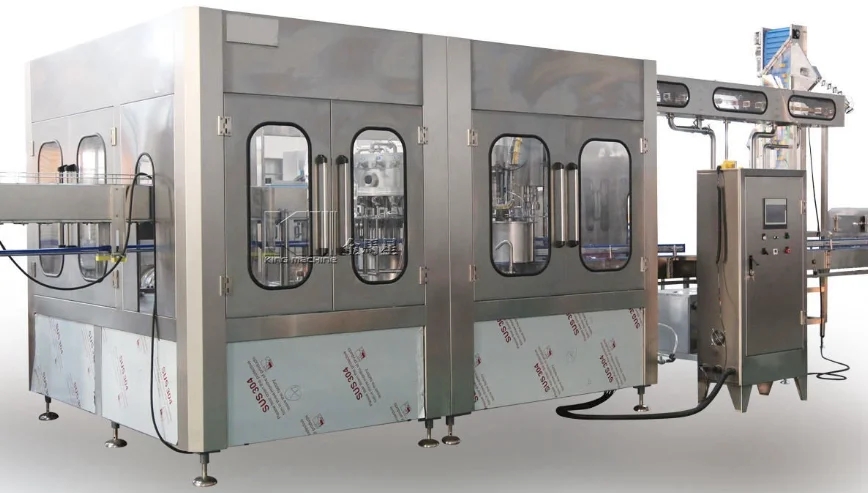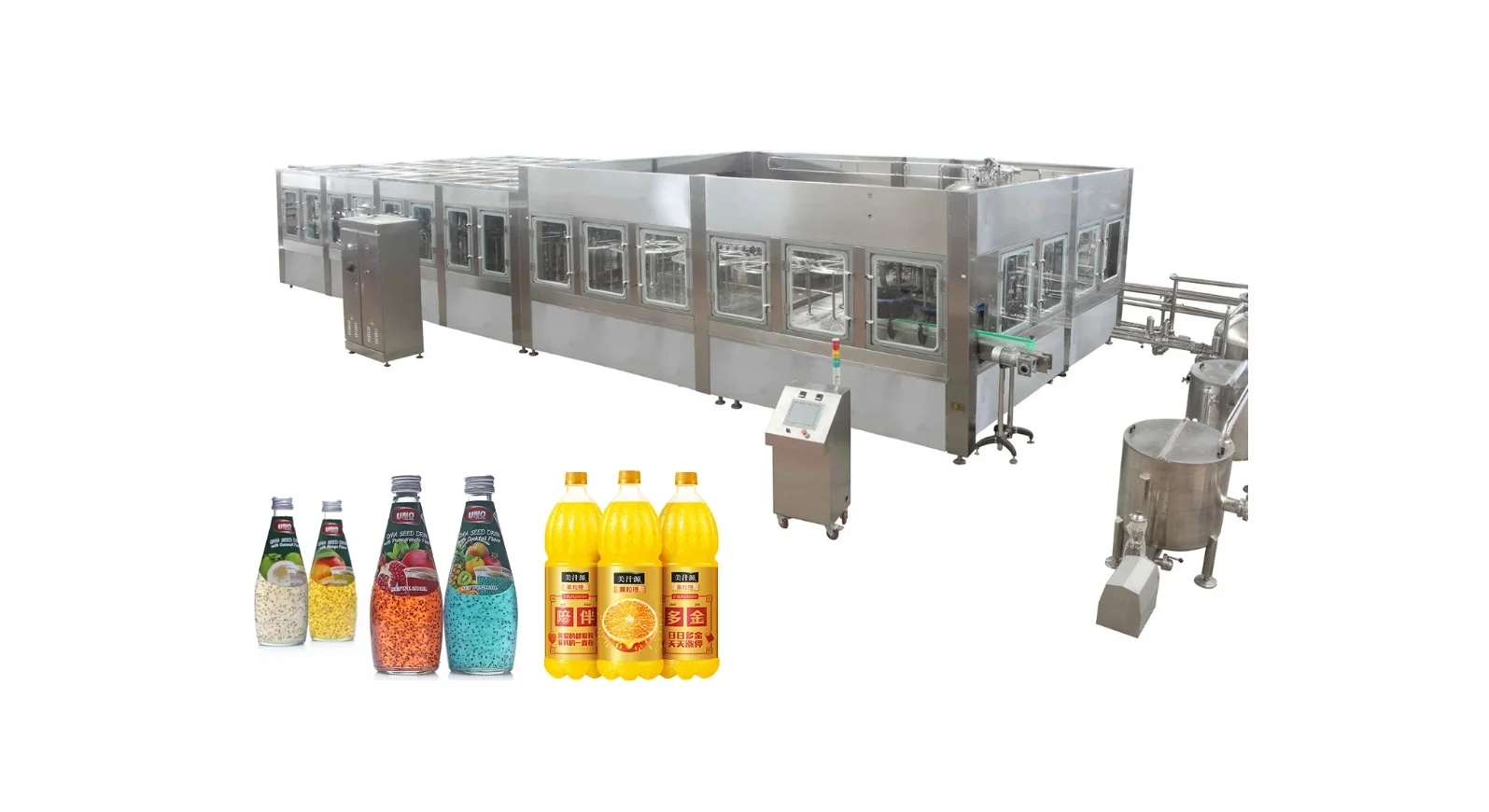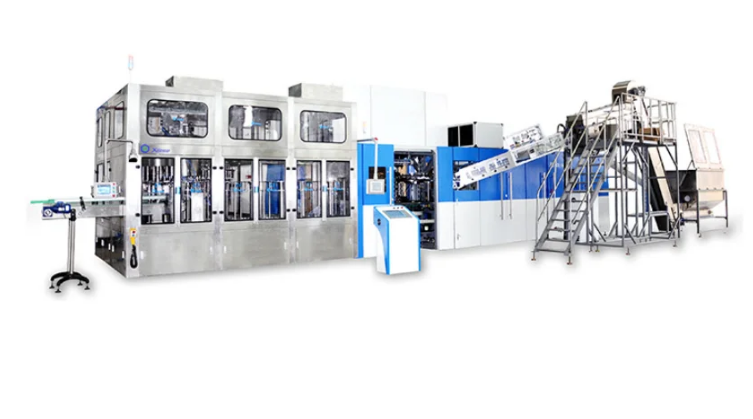
Technological advancements have made many components of filling machines more automated, programmable and reliable. Most models are custom‑built and designed to handle high‑viscosity, adhesive liquids such as coatings and similar fluids. Therefore, when processing and effectively packaging these products, it is necessary to adopt liquid filling machines and other packaging machinery that can resist chemical corrosion. Selecting appropriate liquid filling machines can prevent adverse impacts on product performance, such as coating accumulation during the packaging process.
A complete liquid filling production line consists of a bottle unscrambler, a fully‑automatic liquid filling machine, an automatic corking machine (manual cork feeding required), an automatic screw‑capping machine, a fully‑automatic double‑sided labeling machine for round bottles, and an automatic ink‑jet printer. It applies bottleneck clamping transmission technology to realize fully‑automatic procedures including bottle rinsing, filling and capping. Featuring a high degree of automation, this production line is suitable for the filling of various black‑tea drinks, carbonated beverages, fruit juices and alcoholic beverages. The equipment is equipped with a complete temperature‑control system, reflux system, as well as a full set of automatic cleaning systems and control programs.
During operation, the cleanliness of the liquid filling machine must be guaranteed. The following points should be noted:
- Ensure pipeline cleanliness: All pipelines, especially those in direct or indirect contact with materials, must be kept clean. They shall be scrubbed weekly, flushed with water daily, and sterilized on a regular basis. Material tanks shall be scrubbed and sterilized to ensure no scale or miscellaneous bacteria exist on all material‑contact parts.
- Before each production run, pre‑cool machine tanks and conveying pipelines with water at 0‑1°C. If the filling temperature exceeds 4°C, lower the temperature prior to filling operations.
- Sterilization is an effective method to guarantee the biological stability of bottled beverages during production. Strictly control sterilization time and temperature to achieve sufficient sterilization effect. Meanwhile, avoid excessive sterilization duration or over‑high temperature so as to reduce beverage oxidation. After sterilization, cool down products rapidly so that the temperature shall not exceed 35°C. Low‑temperature filling is required for beverage production. Under normal conditions, beverages are less prone to foaming at low temperatures, which facilitates filling performance.
- Adopt insulated tanks and constant‑temperature filling to maintain stable material temperature throughout the filling cycle, so as to avoid abnormal equipment operation caused by excessive temperature fluctuation.
1. Pre-Cleaning Preparation
- Isolate the equipment from production lines, cut off power, compressed air and material supply to guarantee operation safety.
- Drain residual liquid, raw materials and waste from tanks, pipelines, pumps and filling nozzles.
- Disassemble removable parts: filling nozzles, seals, gaskets, hoses, filters and product contact components for separate inspection and cleaning.
- Sort parts according to material types (304/316 stainless steel, silicone, PTFE) to avoid corrosion or damage.
2. Manual Cleaning (for dismountable small components)
- Rinse parts with warm water first to flush away loose residues.
- Use food-grade alkaline detergent to soak and scrub product-contact surfaces; remove stubborn deposits such as syrup, protein or sediment.
- Follow with intermediate water rinse, then apply food-grade acidic cleaner if needed to eliminate mineral scale.
- Final rinse with purified water / RO water until no foam or residue remains.
- Visually inspect surfaces: no stains, liquid residues, mildew or foreign particles.
3. CIP (Clean-in-Place) Cleaning (for integrated liquid filling lines)
CIP is widely used for automatic filling machines without full disassembly.
- Pre-rinse: Purified water circulation to flush bulk leftover liquid.
- Alkaline wash: Circulate heated alkaline detergent to dissolve organic residues.
- Intermediate rinse: Remove alkaline solution.
- Acid wash (optional): Remove limescale and inorganic deposits.
- Final rinse: Purified water circulation.
- Sanitization: Hot water (≥85°C) or food-grade sanitizer circulation for microbial control.
Record CIP parameters: temperature, flow rate, concentration, circulation time.
4. Sanitization & Disinfection
- Thermal sanitization: Hot water or steam for heat-resistant stainless steel parts.
- Chemical sanitization: Approved food-grade disinfectants (peracetic acid, hydrogen dioxide, chlorine-based sanitizer) for surfaces that cannot sustain high temperature.
- Avoid cross-contamination: separate tools for cleaning and sanitizing.
- Do not leave sanitizer residue on product contact surfaces; final rinse is required.
5. Post-Cleaning Handling & Storage
- Blow dry pipelines and components with clean compressed air or fully air-dry to prevent moisture-induced bacteria growth.
- Check seals and gaskets for aging, cracking or residue buildup; replace damaged parts promptly.
- Assemble cleaned parts in a clean environment.
- Keep the filling machine room dry, ventilated and dust-free when equipment is idle.
6. Validation, Monitoring & SOP Management
- Establish written SOPs for cleaning, sanitization and frequency (after each batch, daily, weekly, deep periodic cleaning).
- Conduct cleaning verification: visual check, ATP swab test, microbial swab test to confirm cleanliness.
- Keep cleaning logs: batch number, cleaning time, operator, detergent type, test results.
- Regular equipment inspection: check dead legs, crevices, corners inside tanks/nozzles where residues tend to accumulate.
- Train operators on hygiene rules and proper cleaning operation.
7. Preventive Measures during Production
- Avoid product overflow and splashing during filling; wipe spillages immediately.
- Control the ambient hygiene of the filling room (air filtration, personnel hand disinfection, clean garments).
- Schedule periodic deep cleaning to prevent biofilm formation on inner surfaces.